
Carbon steel coil/strip
All Products
Message
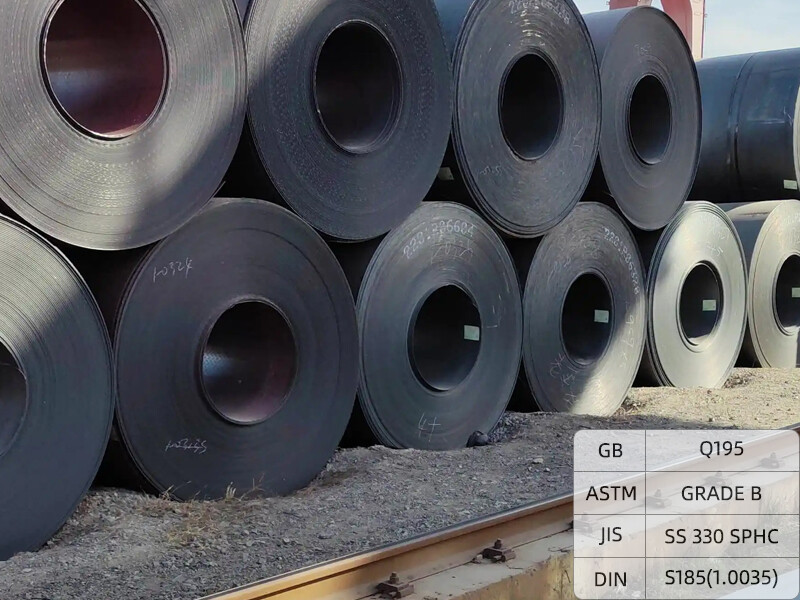
 Q195 Carbon Steel Coil/StripChemical Composition: Low carbon (C ≤0.12%), with silicon (Si ≤0.30%), manganese (Mn ≤0.50%), and strict limits on sulfur (S ≤0.040%) and phosphorus (P ≤0.035%).
Mechanical Properties: Yield strength ≥195 MPa (hence "Q195"), tensile strength 315-430 MPa, elongation ≥30%. It is soft, highly ductile, and easy to cold-form (bend, stamp, roll).
Typical Applications
Light-duty structural parts (brackets, hinges).
Cold-formed products (cans, buckets, thin containers).
Welded components (low-load welded structures, thanks to excellent weldability).
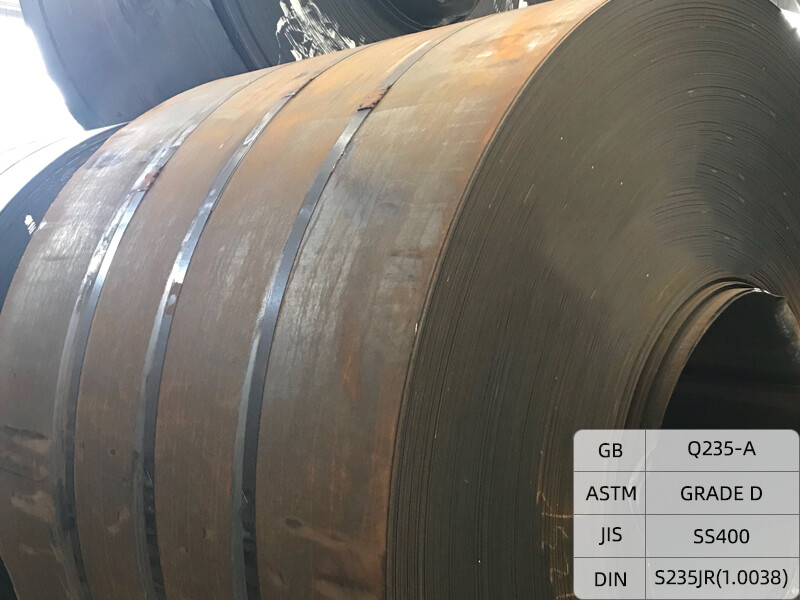
Daily hardware (nails, wire mesh, simple metal parts).- Q235-A Carbon Steel Coil/StripChemical Composition: Carbon (C ≤0.22%), manganese (Mn 0.30-0.65%), silicon (Si ≤0.30%), with sulfur (S ≤0.050%) and phosphorus (P ≤0.045%) controlled for basic purity.
Mechanical Performance: Yield strength ≥235 MPa (the "235" in its name), tensile strength 375-500 MPa, elongation ≥26%. It offers moderate strength while retaining good ductility, allowing for easy cutting, bending, and welding.
Common Applications
General structural components: Frames, brackets, and supports in construction, machinery, and automotive industries.
Welded structures: Low-to-medium stress welded parts (e.g., containers, pipes) due to good weldability.
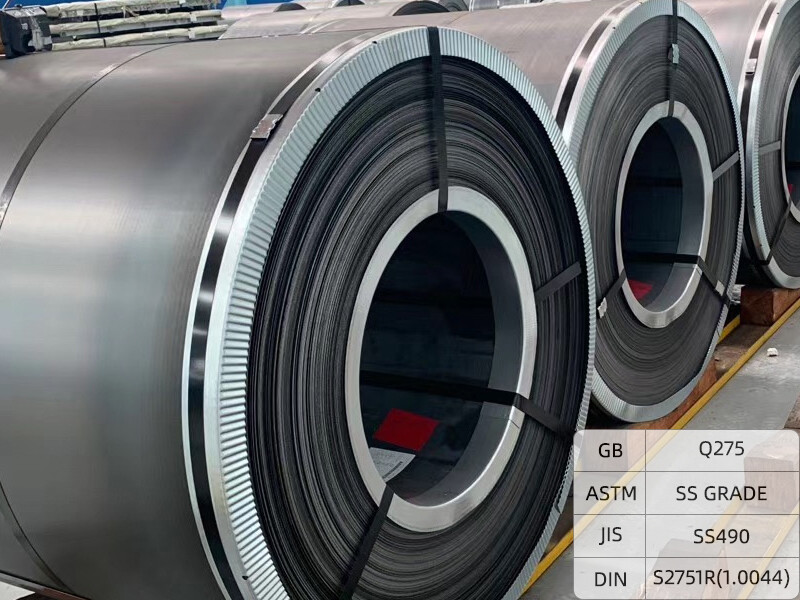
Cold-formed products: Stamped or rolled items like steel strips for hardware, fasteners, or simple metal parts. - Q275 Carbon Steel Coil/StripKey Properties
Composition: Carbon (0.18-0.28%), manganese (0.50-0.80%), with sulfur/phosphorus ≤0.050% each.
Mechanicals: Yield strength ≥275 MPa ("Q275" denotes this), tensile strength 490-630 MPa, elongation ≥20%. It balances strength and moderate ductility.
Applications
Ideal for components needing more load-bearing capacity than lower Q grades:
Medium-stress structural parts (brackets, gears).
Machinery components and industrial fasteners.
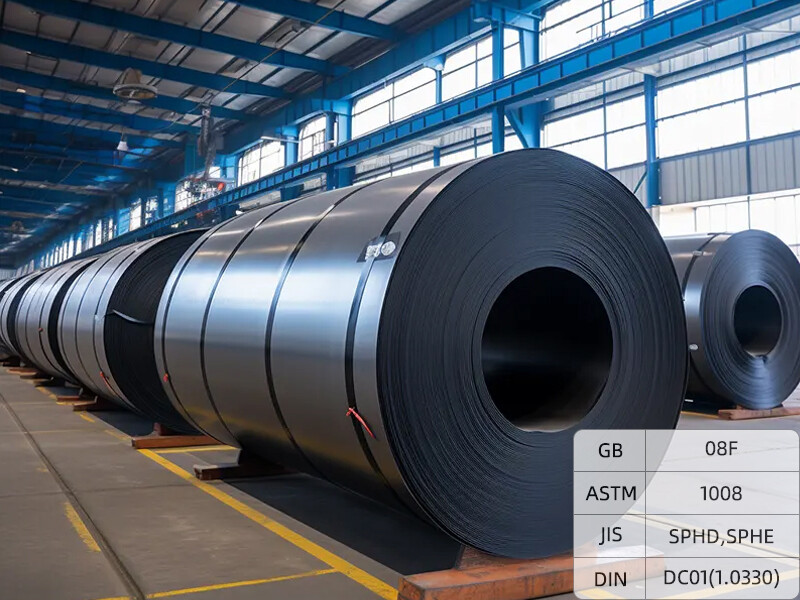
Cold-formed or welded parts requiring higher strength. - 08F Carbon Steel Coil/Striphemical Composition: Ultra-low carbon (C ≤0.08%), with minimal manganese (Mn ≤0.40%) and silicon (Si ≤0.03%). Strict impurity control ensures high purity.
Mechanical Performance: Yield strength ≤185 MPa, tensile strength 270-390 MPa, and elongation ≥35%. It is extremely ductile, enabling deep drawing, stamping, and bending without cracking.
Typical Applications
Complex cold-formed products: Automotive body panels, household appliance casings, and thin-walled containers.
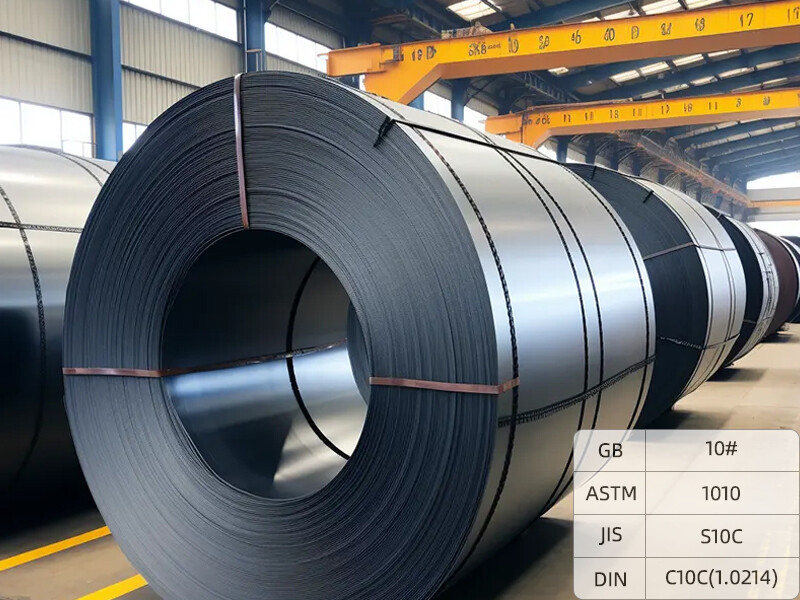
Precision parts: Food cans, decorative metal strips, and small stamped components requiring a smooth surface finish. - 10# Carbon Steel Coil/StripComposition: Carbon (0.07-0.14%), manganese (0.35-0.65%), with sulfur/phosphorus ≤0.035% (strict purity control).
Mechanicals: Yield strength ≥245 MPa, tensile strength 335-475 MPa, elongation ≥25%. It offers good ductility, weldability, and cold/hot formability.
Applications
Cold-formed products: Pipes, strips for fasteners (bolts, nuts), and thin-walled containers.
Mechanical parts: Low-load components (shafts, brackets) and weldments.
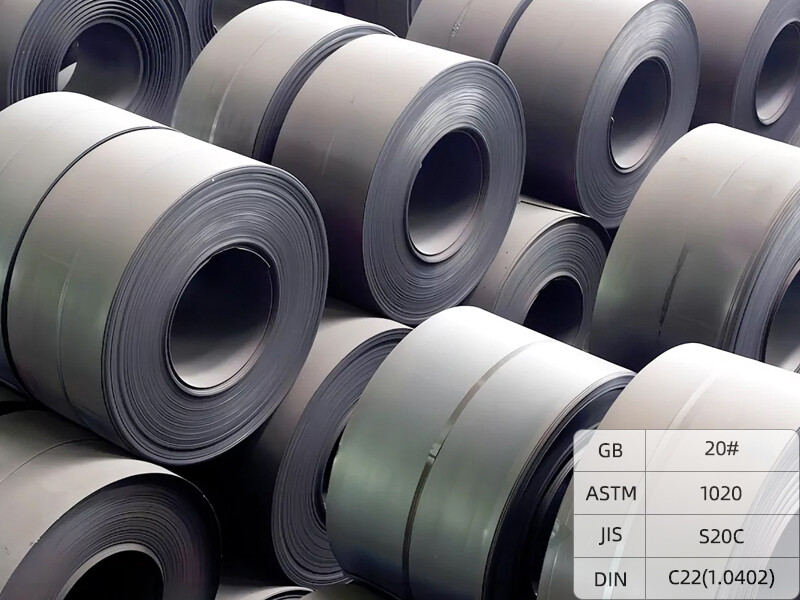
Carburized parts: Surface-hardened components requiring a tough core. - 20# Carbon Steel Coil/Strip20# is a high-quality low-carbon steel coil/strip with approximately 0.20% carbon content, offering higher strength than 10# steel.
Properties: Yield strength ≥245MPa, tensile strength 410-550MPa, elongation ≥22%; good weldability and cold/hot formability.
Applications: Mechanical parts (shafts, gears), welded structures (pipes, containers), and carburized components, suitable for medium-load scenarios.
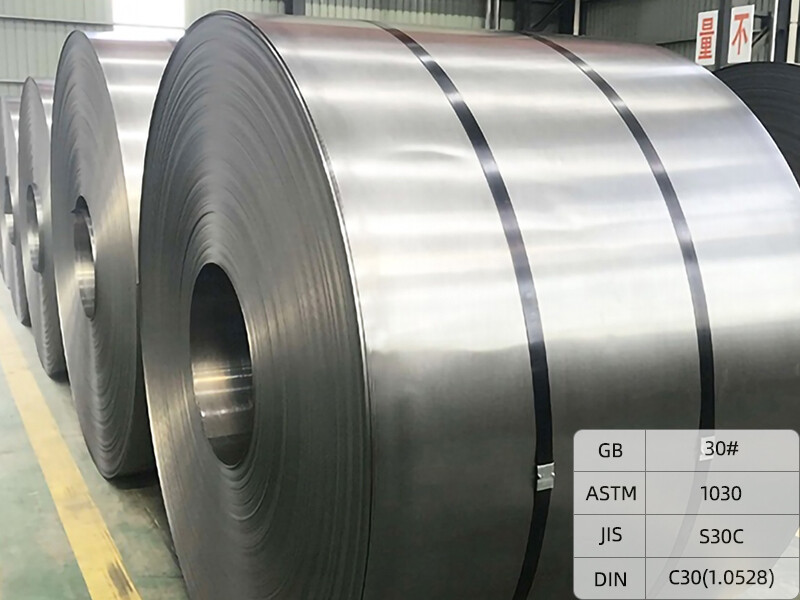
Features: Balances strength and workability, with high cost-effectiveness. - 30# Carbon Steel Coil/StripChemical Composition: Carbon (0.27-0.34%), manganese (0.50-0.80%), with sulfur/phosphorus ≤0.035% (controlled for purity).
Mechanical Performance: Yield strength ≥295 MPa, tensile strength 540-680 MPa, elongation ≥20%. It balances strength and moderate ductility, with acceptable cold/hot formability and machinability.
Typical Applications
Mechanical components: Shafts, gears, bolts, and connecting rods requiring higher load-bearing capacity.
Structural parts: Brackets, levers, and medium-stress weldments in machinery and automotive industries.
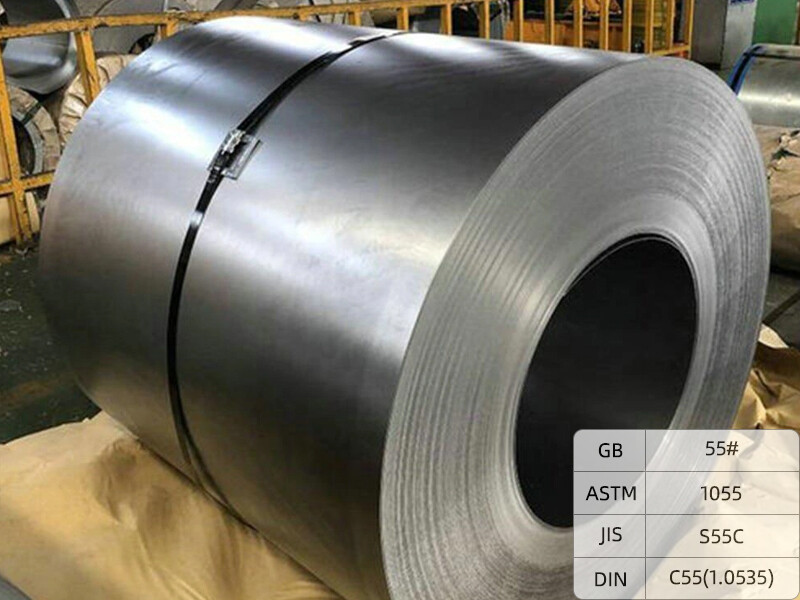
Heat-treated parts: Suitable for normalization or tempering to optimize toughness for specific load requirements. - 55# Carbon Steel Coil/StripChemical Composition: According to GB/T 699 - 2015 standard, the carbon content is 0.52% - 0.60%, silicon 0.17% - 0.37%, manganese 0.50% - 0.80%, sulfur ≤0.035%, phosphorus ≤0.035%, chromium ≤0.25%, nickel ≤0.30%, and copper ≤0.25%.
Mechanical Properties: The tensile strength is ≥645MPa, the yield strength is ≥380MPa, the elongation is ≥13%, the reduction of area is ≥35%, the hardness of the un - heat - treated steel is ≤255HB, and the hardness of the annealed steel is ≤217HB.
Processing Properties: The cutting - processing performance is medium. Due to the relatively high carbon content, the hardness increases after quenching, which brings certain difficulties to cutting. Its weldability and hardenability are poor, and there is a tendency to form cracks during water quenching, so the process parameters need to be strictly controlled during welding and heat treatment.
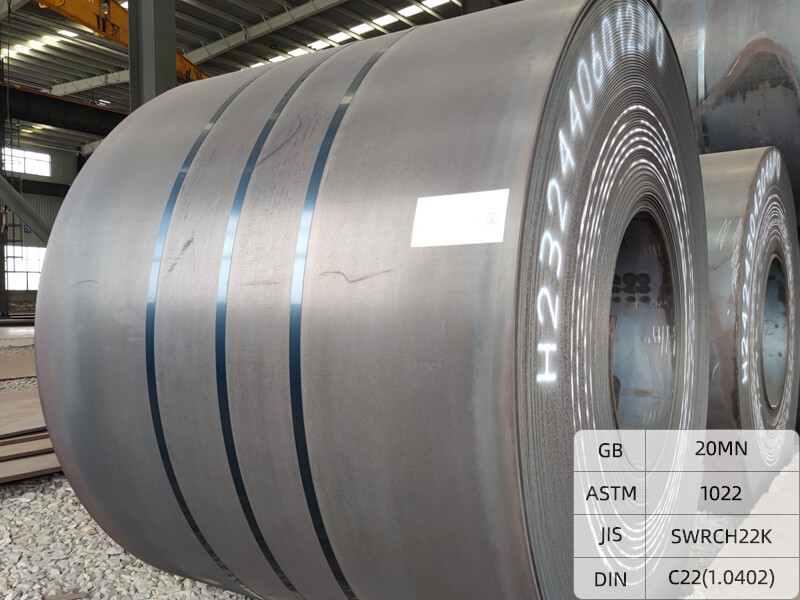
Typical Applications: It is often used to manufacture parts that require higher strength and wear resistance, as well as parts with low elastic, dynamic load and impact load, such as gears, rim, flat springs, crankshafts, etc. It is also widely used in engineering machinery, automotive parts, tools and blades, forgings and other fields. - 20MN Carbon Steel Coil/Strip20Mn is a low-carbon manganese steel coil/strip with ~0.20% carbon and 1.20-1.60% manganese, offering higher strength and hardenability than plain carbon steels like 20#.
Properties: Yield strength ≥275MPa, tensile strength 450-600MPa, elongation ≥20%. Good cold/hot formability and weldability; manganese enhances strength without losing ductility.
Applications: Used in machinery parts (shafts, gears), automotive components, welded structures, and cold-formed parts requiring higher strength than ordinary low-carbon steels.
Features: Balances strength, toughness, and processability, suitable for medium-load structural and mechanical uses.

{item.title}
{item.description}